If your workday needs more than a laptop on a kitchen counter, Avila deserves a closer look. Many luxury buyers want a home that supports focus, privacy, and creativity without giving up comfort or beauty. In Avila, you can find estate-style homes with the kind of flexible rooms that make remote work feel intentional, not improvised. Let’s dive in.
Why Avila Fits Modern Remote Work
Avila is not just a residential address. It is a gated estate community in the Tampa Bay area with roughly 900 acres, about 398 residences today, and about 428 at buildout, according to the property owners association. The community is known for tree-lined streets, natural terrain, lakes, wetlands, and abundant native trees.
That setting matters when you work from home. Privacy can help you focus, and a calm backdrop can make your daily routine feel more balanced. Avila also has gatehouse staff available 24/7/365 and patrols on the inner and outer premises, which adds to the community’s strong privacy profile.
Remote work is also not a passing trend. In 2024, the U.S. Bureau of Labor Statistics reported that 19.0% of Florida workers teleworked or worked at home for pay. For many households, a home office, studio, or quiet flex space is now a practical need.
Avila Homes Offer More Than a Desk Nook
One of Avila’s biggest advantages is room count. Recent listings show homes with spaces labeled den, library, office, loft, bonus room, and media room. Those labels matter because they suggest flexibility without locking the home into one very specific use.
For example, one recent Avila listing at 16109 Orbita De Avila offered 5,121 square feet with 15 total rooms, plus a den or library or office, loft, and media room. Another at 16607 Avila Blvd included a library and bonus room across 5,881 square feet. At 704 Berrocales De Avila, the layout included a den or library or office along with formal living and dining rooms.
For you, that can mean options. A den can become a main office, a loft can serve as a second workspace, and a media room can support editing, recording, or presentations. In larger homes, it may even be possible to create separate zones for work, guests, and everyday living.
Best Rooms for a Home Office
Not every extra room works the same way. In Avila, the most useful spaces often depend on how you work and how much separation you want from the rest of the house.
Den or Library for Daily Focus
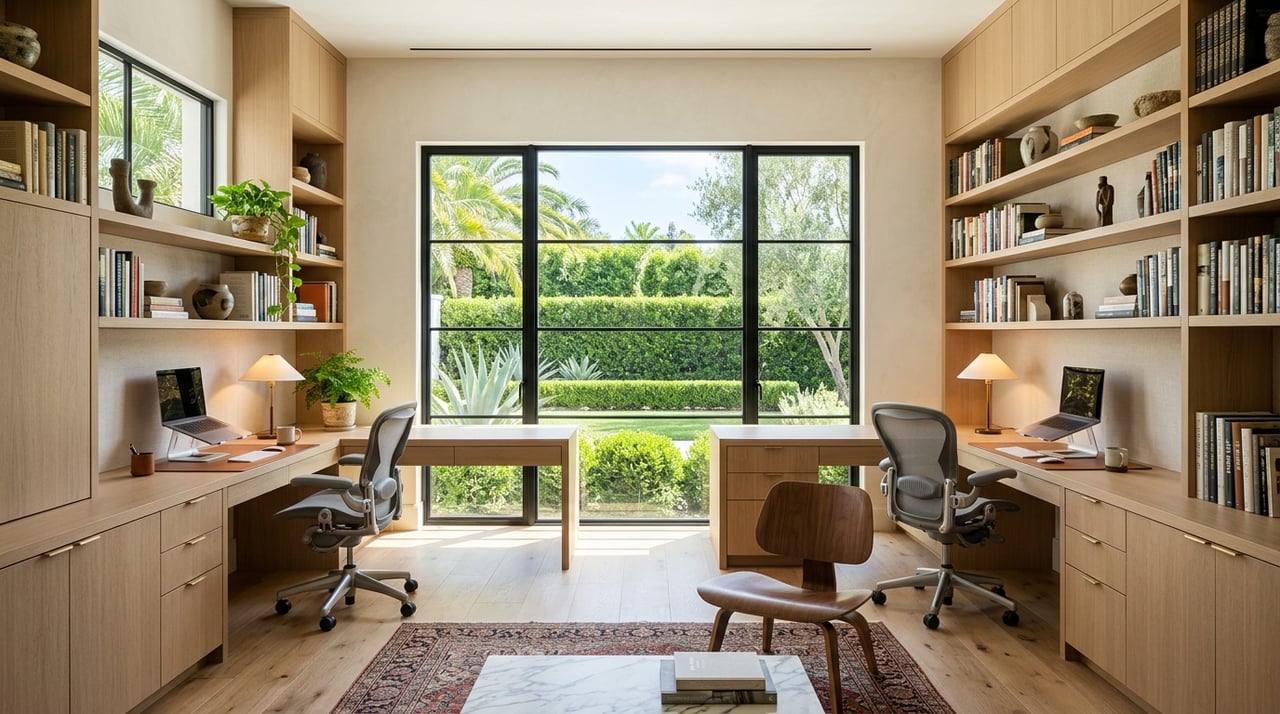
A den or library is often the most natural fit for a primary office. These rooms usually feel more enclosed and polished, which can help with concentration during calls, writing, planning, or client meetings. They also tend to translate well for future resale because the use remains broad and familiar.
Loft for Flexible Work
A loft can work well if your schedule is more casual or collaborative. It may be ideal for a homework station, a creative planning area, or a second office for a partner. If you need more sound control, though, a loft may require thoughtful furniture placement and soft materials.
Bonus or Media Room for Creative Output
If your work involves content creation, podcasting, editing, or presentations, a bonus room or media room may be the best fit. These rooms can sit farther from the main living areas, which may help with noise control. They also give you more freedom to add storage, equipment, and lighting layers.
How to Design a Better Work-From-Home Space
A beautiful room is only part of the story. For remote work, comfort and performance matter just as much as appearance.
The Centers for Disease Control and Prevention advises teleworkers to choose a space where noise, lighting, and temperature can be well controlled. OSHA also notes that bright light behind a screen can create contrast issues, and task lighting should be placed so it does not reflect on your monitor.
That guidance is especially helpful in Avila’s larger homes, where you may have multiple room choices. Instead of picking the prettiest room first, start with control. Ask which room lets you manage glare, sound, background appearance, and daily interruptions most easily.
Focus on Lighting First
Lighting shapes how a room feels on screen and how your eyes feel at the end of the day. The CDC notes that excessively bright light can contribute to eye strain, while OSHA warns against glare and contrast problems caused by poor light placement.
A smart setup often includes:
- Natural light that comes from the side rather than directly behind you
- Task lighting positioned to avoid monitor reflections
- LED fixtures in frequently used rooms
- Layered lighting that works for both meetings and focused solo work
The U.S. Department of Energy also recommends using ENERGY STAR or LED fixtures in rooms that get regular use. That can support both comfort and efficiency in a dedicated office or studio.
Improve Sound and Visual Calm
If your day includes calls, recordings, or long focus blocks, sound control matters. A room away from the busiest parts of the house can make a real difference. Built-ins, bookshelves, rugs, and upholstered seating can also help the room feel quieter and more finished.
Visual calm matters too. Integrated storage can keep cords, papers, and equipment out of sight, which helps the room look more polished on camera and feel less cluttered in daily use.
Creative Living Works Here Too
Remote work is not only about productivity. For many buyers, it is also about making room for creative habits, side ventures, and better daily rhythms.
Avila supports that lifestyle in a few ways. At home, larger floor plans can leave space for art, writing, design work, music, or digital content creation. Beyond the home, the community and club setting can help you shift gears after the workday instead of feeling stuck in the same four walls.
The club highlights a Jack Nicklaus-designed championship golf course, tennis, dining, a fitness center, a swim pavilion, and social events. The property owners association also notes the Avila Women’s Club and interest groups such as book club and bridge. For many buyers, that mix can support a more rounded work-from-home routine.
Preserve Resale Value While Personalizing
It is tempting to build a highly specialized room for one exact hobby or business need. In luxury real estate, though, flexibility often protects value better than a very narrow setup.
That is one reason room labels like den, library, office, loft, media room, and bonus room are so useful. They leave space for imagination. A buyer may see a studio where you saw an office, or a lounge where you saw a production room.
If you plan to customize, the safest choices are often the ones that can be reversed or broadly appreciated later. Consider upgrades like:
- Better lighting layers
- Built-in storage
- Improved acoustics
- Clean network equipment placement
- Furniture layouts that define purpose without overcommitting the room
These choices can improve daily life while keeping the home elegant and adaptable.
Avila Design Standards Matter
In Avila, design decisions do not happen in a vacuum. The architectural review guidelines describe a community of single-family homes, patio homes, cluster homes, and villas set within natural terrain, lakes, wetlands, and native trees. The guidelines also emphasize a uniformly high standard for residences and improvements.
That context is important if you are thinking about tailoring a home for remote work. In many cases, the most flexible place to personalize is the interior. Lighting, acoustics, storage, network planning, and furniture layout can transform how a home lives day to day while staying aligned with the community’s established exterior character.
What Luxury Buyers Should Notice in Avila
If you are comparing Avila with other luxury communities, look past square footage alone. Pay attention to how the rooms are distributed, how private the office areas feel, and whether the plan allows true separation between work and living.
In a strong remote-work home, you are not just buying extra rooms. You are buying options. You are buying the ability to take a call in one space, create in another, and still preserve the feeling of a refined residence.
That is where Avila stands out. The combination of estate-scale homes, flexible room programs, a gated setting, and lifestyle amenities gives you more ways to shape a home around the way you actually live and work.
If you are exploring Avila as a buyer, or preparing an Avila home for sale, a design-led strategy can make all the difference. Jose Cardenas brings a refined eye for space, presentation, and luxury positioning to help you see what a home can become.
FAQs
What makes Avila homes good for remote work in Tampa Bay?
- Avila homes often include flexible spaces such as dens, libraries, lofts, bonus rooms, and media rooms, which can support dedicated offices, creative studios, or dual work-from-home setups.
Which room type works best as a home office in Avila?
- A den or library is often the strongest choice for a primary office because it usually offers better privacy, a more polished feel, and broad resale appeal.
How should you set up lighting for a remote office in an Avila home?
- A strong setup uses controllable light, avoids glare behind or on the screen, and includes task lighting placed to reduce reflections and eye strain.
Can you customize an Avila home for creative work and still protect resale value?
- Yes, in many cases the safest approach is to make flexible upgrades such as lighting, acoustics, storage, and furniture layout rather than creating a very specific single-use room.
Does Avila offer lifestyle features beyond the home itself?
- Yes, Avila is known for its gated estate setting and club amenities that include golf, tennis, dining, fitness, swimming, and social activities, which can support a more balanced work-from-home lifestyle.