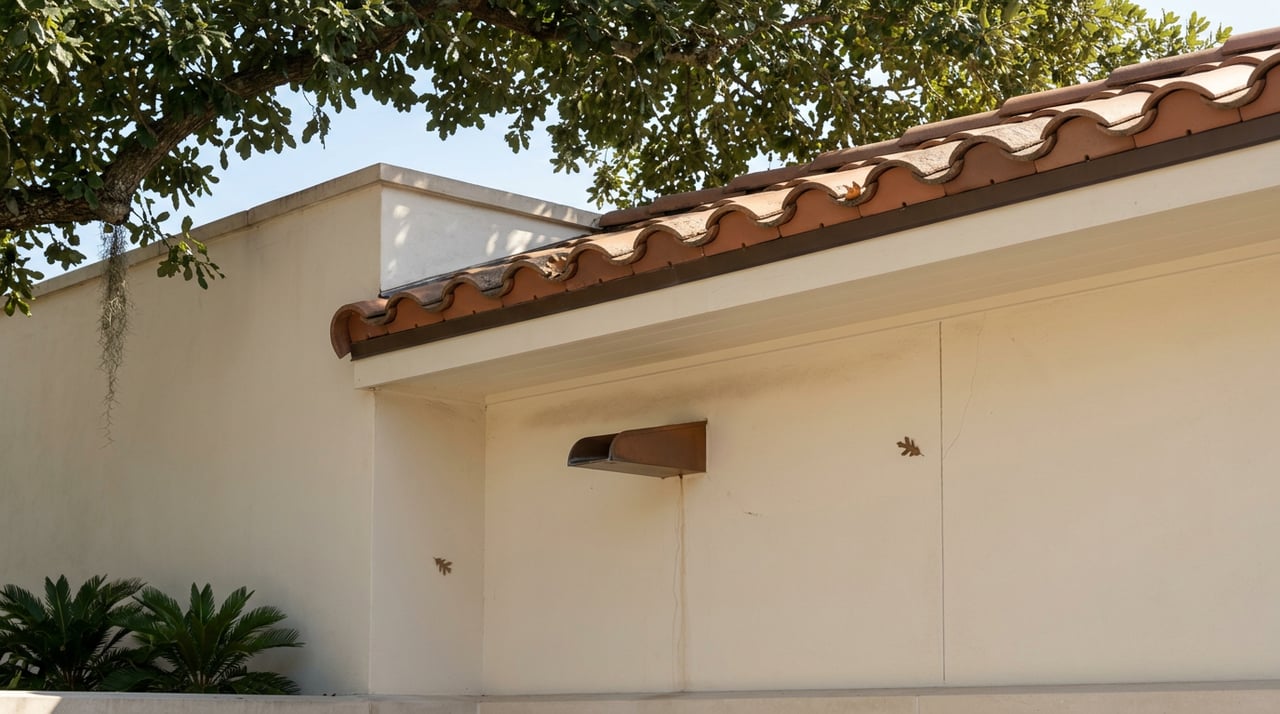
A client calls in May with a plan. Repaint the exterior, swap the barrel tile, redo the motor court in honed limestone, list before the fall season. Twelve weeks, tight but doable. Then the question that changes the calendar: has the Architectural Review Committee seen any of it yet?
In Avila, that answer is the difference between a September listing and a January one. The gate is not the only layer of control on the property. The ARC is, and for a pre-listing renovation it is the layer that quietly sets your scope, your material palette, and your closing date.
The ARC is a design gate, not a rubber stamp
Avila Property Owners' Association was registered as a Florida property owners association in 1979, and the community's Declaration of Covenants, Restrictions and Assessments assigns architectural control to a committee that reviews exterior work against the community's design standards. The ARC's stated purpose is to keep construction across the subdivision uniformly high, attractive, and harmonious — language that, translated into practice, means the committee has room to push back on materials, massing, and site work that a Hillsborough County permit reviewer would wave through.
Two things follow from that. The county permits the structure. The ARC permits the design. Both have to say yes.
Two submittals, one county, one clock
The published Avila ARC procedures set up a staged path. Skip a stage and you restart it.
- Preliminary Design Review Meeting. Optional, but the guidelines flag it as especially useful for owners, architects, and builders new to Avila. Setbacks, adjoining homes, existing trees, and procedural expectations get raised here before drawings become expensive.
- Preliminary Approval. Two copies of a preliminary floor plan at quarter-inch scale, room sizes and uses called out, submitted with the ARC's Application For Approval of Preliminary or Final Design, Remodeling, Changes or Additions.
- Final Approval. Full design set, materials, colors, site plan.
- County permitting. Hillsborough County has jurisdiction over Avila, and the ARC guidelines direct owners to contact the county at the beginning of planning to confirm code compliance.
The order matters. County plan review does not care what the ARC thinks about your paint color. The ARC does not care that your engineer already sealed the drawings. Running the two tracks in sequence adds months. Running them in parallel is possible only if the preliminary ARC concept is locked before the county set is drafted, because a materials change to satisfy the committee is a re-submittal to the county.
The covenants that catch sellers off guard
The Declaration carries a few provisions that do not show up on the MLS sheet and rarely appear in generic Florida HOA guides:
- Golf Course Lot pond restriction. Owners of lots contiguous to or abutting the golf course are restricted from using any pond, lake, or body of water contiguous to those lots in any manner whatsoever. The waterfront view is an asset. The water itself is not a private amenity.
- Golf Course Easement. Exclusive rights and easements run with the land on the portion of each lot adjacent to the course, defined across several paragraphs of the Declaration. A pool addition, a screened lanai extension, or a new pergola on that band of the lot is not a design decision, it is a boundary question.
- Vehicle conduct on private roads. Operation must be careful, quiet, and considerate. During a renovation, that translates into constraints on contractor traffic, delivery windows, and staging behind an eight-foot perimeter wall with a twenty-four-hour manned gate.
None of these are unusual for a guarded luxury enclave. All of them are specific enough that a general contractor whose last job was in New Tampa will have to be briefed before the first delivery.
What "deemed approval" actually means here
Florida Statute §720.3035 grants HOAs the authority to establish architectural control provisions, and the statutory frame requires that authority be clearly stated in governing documents. Under §720.303, when a homeowner requests records in writing, the association has ten business days to provide access. Response windows to modification requests typically run 30 days unless the governing documents say otherwise, and Florida practice recognizes that a committee's failure to respond within the specified window can be deemed an approval.
Two cautions before anyone treats that as a shortcut. Avila's Declaration and ARC procedures set their own timelines, and staged submittals reset the clock at each stage. And a deemed approval that turns on a procedural technicality is not a document a buyer's attorney wants to see in a closing file. The clean file is the one with a signed ARC approval in it, matched to the county permit and the certificate of completion.
Reading the dues and the disclosure package
Published figures on Avila's carrying costs disagree, and the disagreement is useful.
| Source | Figure | Window |
|---|---|---|
| CommunityPay directory | Median monthly fee of $371 | Verified May 2026 |
| Lewkowicz Group buyer guide | HOA fees ranging from $5,000 to $10,000+ annually, depending on phase or sub-section | 2026 |
| Hillsborough County (unincorporated) | Millage of roughly 1.83%, roughly $54,000 on a $3M home | 2026 |
The spread between roughly $4,450 a year at the median and $10,000+ at the high end is not a data error. It reflects that Avila is built out in phases with different sub-associations and amenity obligations, and that the club is a separate invitation membership from the mandatory community dues. A serious buyer asks for the estoppel and the governing documents for the specific parcel before writing the offer, not after. A serious seller assembles that package before the sign goes in the ground.
Membership in the Avila Golf and Country Club is separate from property ownership and is not mandatory for residents. Confirm current membership terms and whether a membership is required or optional for the specific home before you offer.
That distinction — residency versus club membership — is the single most misunderstood piece of the Avila transaction, and it belongs in the pre-listing conversation, not the eleventh-hour one.
Sequencing a pre-listing renovation
For a design-led refresh intended to reach the market inside a single selling season, the sequence looks less like a construction schedule and more like a governance schedule with construction attached.
- Weeks 1 to 2. Pull the current Declaration, ARC guidelines, and any recent amendments from the association. Request the estoppel. Confirm whether the parcel is a Golf Course Lot under the Declaration and map the easement band on a current survey.
- Weeks 2 to 3. Book the Preliminary Design Review Meeting. Walk the committee through concept, materials, and site work before drawings go into production.
- Weeks 3 to 6. Preliminary submittal to the ARC. Concurrent design development.
- Weeks 6 to 10. Final submittal to the ARC and permit set to Hillsborough County. Sequenced so a committee-driven change does not force a county re-submittal.
- Weeks 10 to 20+. Construction, staged with the guardhouse for deliveries and contractor access. Interior scope runs in parallel and is not ARC-gated for finishes that are not visible from adjoining lots or the street.
- Pre-listing. Certificate of completion, signed ARC approval, and closed permits assembled into the disclosure binder. That binder is the buyer's answer to "was this work done properly," and it is the file that lets a listing hold price during inspection.
An owner who begins this cycle in February can reasonably reach the market in September. An owner who begins in June and expects the same window is either scoping interior only or already behind.
What the resale math actually rewards
The market context helps calibrate the effort. Inventory in Avila has been thin, with a small handful of active single-family listings against a median list around $3.3M and marketed days on market in the two-month range through spring 2026. Buyers at that price point are underwriting the lot, the condition, and the paperwork. A design-led renovation that carries a clean ARC file and a matching county record protects the ask. The same work without that file becomes an inspection concession, a re-inspection contingency, or a closing delay while a title company chases a signed approval that should have been in hand a year earlier.
The renovation is not the risk. The governance layer around the renovation is the risk, and it is the layer most owners underestimate because it does not appear on a permit portal, a listing sheet, or a portal search filter.
If you own in Avila and are thinking about a pre-listing refresh, or you are under contract and planning to reshape a home once you close, the sequence above is the version that protects both the design outcome and the resale outcome. Jose Cardenas works this ARC process the way an architect works a program: on paper, in front of the committee, before the first invoice is written.
Let's artfully market your home.