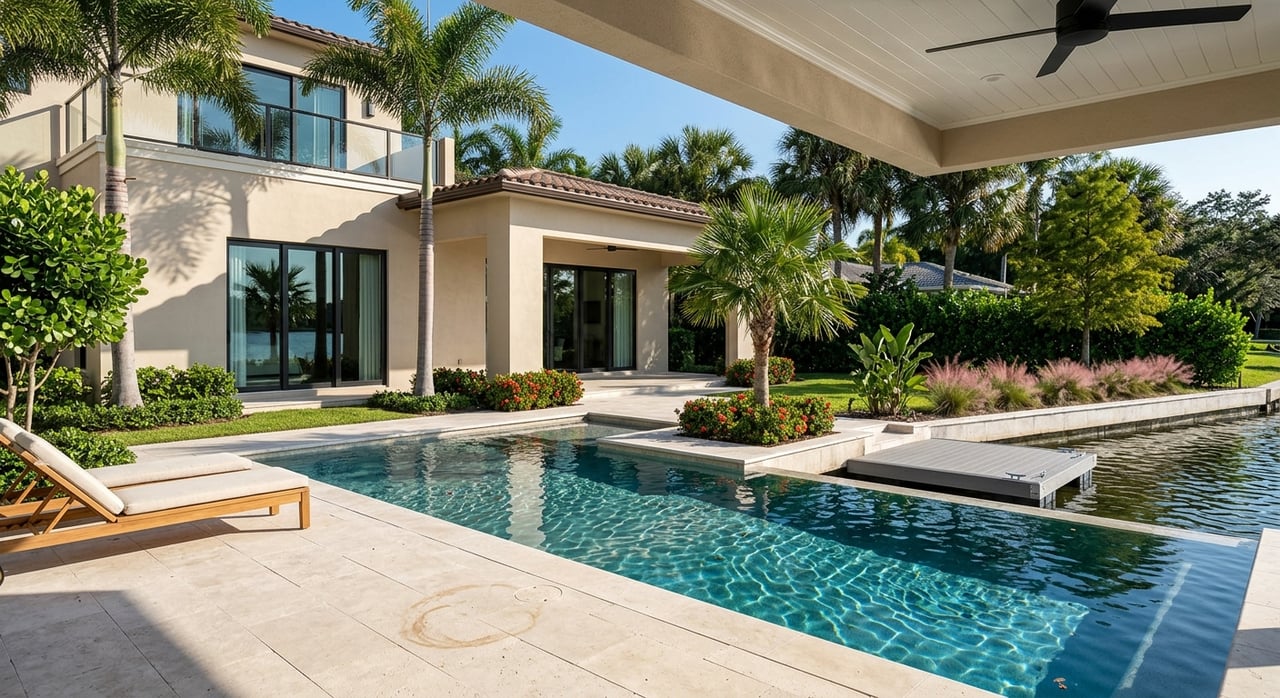
If lakefront living inside Avila is on your radar, it is worth looking past the view first. A shimmering backyard waterline can feel like the ultimate luxury, but in Avila, the details behind that view matter just as much as the setting itself. When you understand how frontage, access, approvals, and insurance work here, you can buy with more clarity and far fewer surprises. Let’s dive in.
Why lakefront in Avila stands out
Avila is a gated private residential community in Tampa where all property owners are members of the association. According to the Avila Property Owners Association, the community is known for tree-lined streets, luxury estates, a country club at its center, and many ponds and lakes, with gatehouse staff and patrols operating 24/7.
That setting creates a polished, private backdrop for water-adjacent homes. It also means lakefront living here comes with a more structured ownership experience than buyers may find in other parts of Hillsborough County.
Not every water view is the same
One of the most important things to confirm is what kind of water relationship a property actually has. Avila’s own materials refer broadly to many ponds and lakes, so two homes marketed as water-facing may offer very different experiences in terms of shoreline, privacy, and usable access.
The main nearby waterbody most relevant to this topic is Lake Magdalene, which Hillsborough County’s Water Atlas identifies as a 252-acre private lake in unincorporated Hillsborough County within the Sweetwater Creek watershed. The same source lists a mean depth of 8 feet and a maximum depth of 24 feet.
Before you fall for a sunset view, verify whether the lot truly abuts the water, whether it faces Lake Magdalene or another pond or lake, and whether the water behind the home carries any use restrictions. A quick starting point is the county’s map viewer and parcel search tools.
Lake access rules matter more than you think
In many communities, buyers assume a backyard on the water automatically means broad lake use. In Avila, that assumption can lead to disappointment.
Avila’s recorded ARC guidelines state that for most Avila lakes, except Lake Chapman, use of the lake and its islands is limited to owners whose lots abut that lake and their guests. The guidelines also prohibit boats over 12 feet on any lake and allow only electric motors under 1 horsepower, according to the ARC guidelines and appendixes.
That means your vision of lake living should match the actual rules of the parcel. If you picture larger watercraft, frequent boating, or a more flexible dock setup, you will want to confirm early whether the property can support that lifestyle at all.
Ask if the lot is truly lakefront
Some parcels may have a water view without having the same rights as a lot that directly abuts the lake. Others may sit near golf areas and water at the same time, which can change how the property can be used.
Avila’s covenant package includes separate restrictions for some golf-course-adjacent lots, including a provision that owners of certain golf-course lots are restricted from using adjacent ponds, lakes, or bodies of water in any manner. This is one of those details that should be verified parcel by parcel, not assumed from listing photos or aerial views.
Docks require more than a contractor quote
If your dream lakefront home includes a dock, treat that as a layered approval process. In Avila, prior written approval is required before constructing docks or similar structures, based on the community’s ARC guidelines.
The same guidelines show how closely exterior changes are reviewed. New buildings and many exterior improvements require prior written approval, and the association can review landscaping, grading, fences, materials, color schemes, drainage changes, and other site work.
For you as a buyer, that means dock feasibility is not just about budget. It is about HOA approval, site conditions, and public permitting.
County and state permitting still apply
Even with HOA approval, water-related work may need government review. Hillsborough County EPC manages many inland wetland and waterbody activities through its wetlands permitting process, while Florida DEP offers self-certification for some single-family dock projects and requires other projects to pursue authorization.
In practical terms, a waterfront lot may still have limits on what can be built and how quickly it can be approved. If a dock is central to your decision, ask for a realistic path forward before you commit.
Privacy and views depend on the lot
A beautiful lakefront address does not always equal a wide-open rear view. In Avila, the feel of a lakefront lot can vary based on orientation, tree canopy, backyard depth, and how much of the lot opens to the water.
That variation is part of what makes buying here more nuanced. One parcel may feel expansive and light-filled, while another may offer a more sheltered, layered landscape with filtered water views.
Landscaping controls shape the experience
Avila’s tightly controlled setting helps preserve a polished look across the community. The HOA’s guidelines include tree-preservation language stating that reasonable care must be used to preserve trees during development, and that no excavation, fill, or clear-cutting may occur in violation of law or the declaration.
For a buyer, this can be a benefit and a constraint at the same time. Mature trees may enhance shade and privacy, but they can also limit how dramatically a yard can be opened up after closing.
Storage rules affect day-to-day living
Luxury buyers often focus on architecture, views, and finish level first. But with lakefront ownership, practical storage rules can shape daily convenience just as much as the floor plan.
Avila’s community materials note controlled access and patrol coverage, and the community’s benefits page outlines general rules stating that boats, trucks, trailers, and recreational vehicles may not be visible from neighboring property. The covenants also require vehicles to be garaged or screened from view, as described on Avila’s community benefits page.
If you plan to keep a boat trailer, water toys, or service equipment at home, look carefully at garage capacity and approved screening options. A home may have water behind it and still fall short on storage that works for your lifestyle.
Flood risk needs a separate review
Lakefront beauty and flood planning go together. Hillsborough County says flooding is its most costly and repetitive natural disaster, that inland flooding near lakes is common, and that every property is in a flood zone, according to the county’s floodplain management guidance.
That does not mean every property carries the same level of risk. It does mean you should evaluate flood exposure carefully and avoid relying on assumptions based only on elevation, neighborhood reputation, or a seller’s current policy.
Flood zones and evacuation zones are different
This catches many buyers off guard. Hillsborough County makes clear that flood zones and evacuation zones are not the same designation.
Before you move forward, check both using the county’s guidance on evacuation zones versus flood zones. That extra step gives you a better understanding of both insurance considerations and storm planning.
Insurance should be quoted early
Insurance is a core cost in any Florida purchase, and inland lakefront homes are no exception. FloodSmart states that most homeowners policies do not cover flood damage, and flood insurance is purchased separately. The same source notes that NFIP coverage normally begins 30 days after purchase unless an exception applies.
This timing matters if you are trying to coordinate closing, lender requirements, and post-closing risk. It is smart to request both homeowners and flood quotes early in your due diligence window.
The research also notes that Citizens requires flood coverage for many personal residential policies with wind coverage, including homes in special flood hazard areas and, beginning January 1, 2026, all such policies regardless of flood zone once certain coverage thresholds are met. Florida insurance guidance also points to separate roof deductibles and roof-age inspection rules, which can affect total ownership cost.
A smart lakefront buying checklist
When you tour lakefront property in Avila, keep your eye on both the romance and the rules. The best purchase is usually the one where the home’s design, the lot’s limitations, and your intended use all line up.
Here is a practical checklist to bring into your search:
- Confirm which waterbody the parcel actually faces and whether the lot truly abuts the water.
- Review whether the parcel is standard lakefront, golf-course-adjacent, or both.
- Ask whether a dock is realistically approvable under Avila rules and then under county or state permitting.
- Check the flood zone and evacuation zone separately.
- Request homeowners and flood insurance quotes early.
- Ask how exterior storage rules apply to boats, trailers, and service equipment.
- Evaluate how tree canopy, grading controls, and backyard depth affect the actual view and usability.
In a community as refined and structured as Avila, details create value. If you want a lakefront home that feels effortless after closing, careful due diligence before closing is what gets you there.
If you are considering a lakefront purchase in Avila and want a more design-aware, highly tailored perspective on lot potential, privacy, and long-term livability, connect with Jose Cardenas. His boutique approach helps you look beyond the listing photos and make a more informed luxury purchase.
FAQs
What should buyers verify about lakefront homes in Avila?
- Buyers should confirm which waterbody the lot faces, whether the parcel truly abuts the water, and what use rights apply under Avila’s ARC and covenant rules.
Can buyers build a dock on an Avila lakefront lot?
- Possibly, but prior written HOA approval is required, and county or state permitting may also apply depending on the project.
Are boats allowed on lakes inside Avila?
- Avila’s ARC guidelines state that boats over 12 feet are prohibited on any lake, and only electric motors under 1 horsepower are allowed.
Do flood zones matter for inland lakefront homes in Avila?
- Yes. Hillsborough County says inland flooding near lakes is common, and buyers should review both flood zones and evacuation zones before purchasing.
Does standard homeowners insurance cover flood damage in Avila?
- No. FloodSmart states that most homeowners policies do not cover flood damage, so flood insurance is typically a separate policy.
Why do storage rules matter for Avila lakefront buyers?
- Because community rules may limit visible storage of boats, trailers, and recreational equipment, making garage space and screening options important to review.