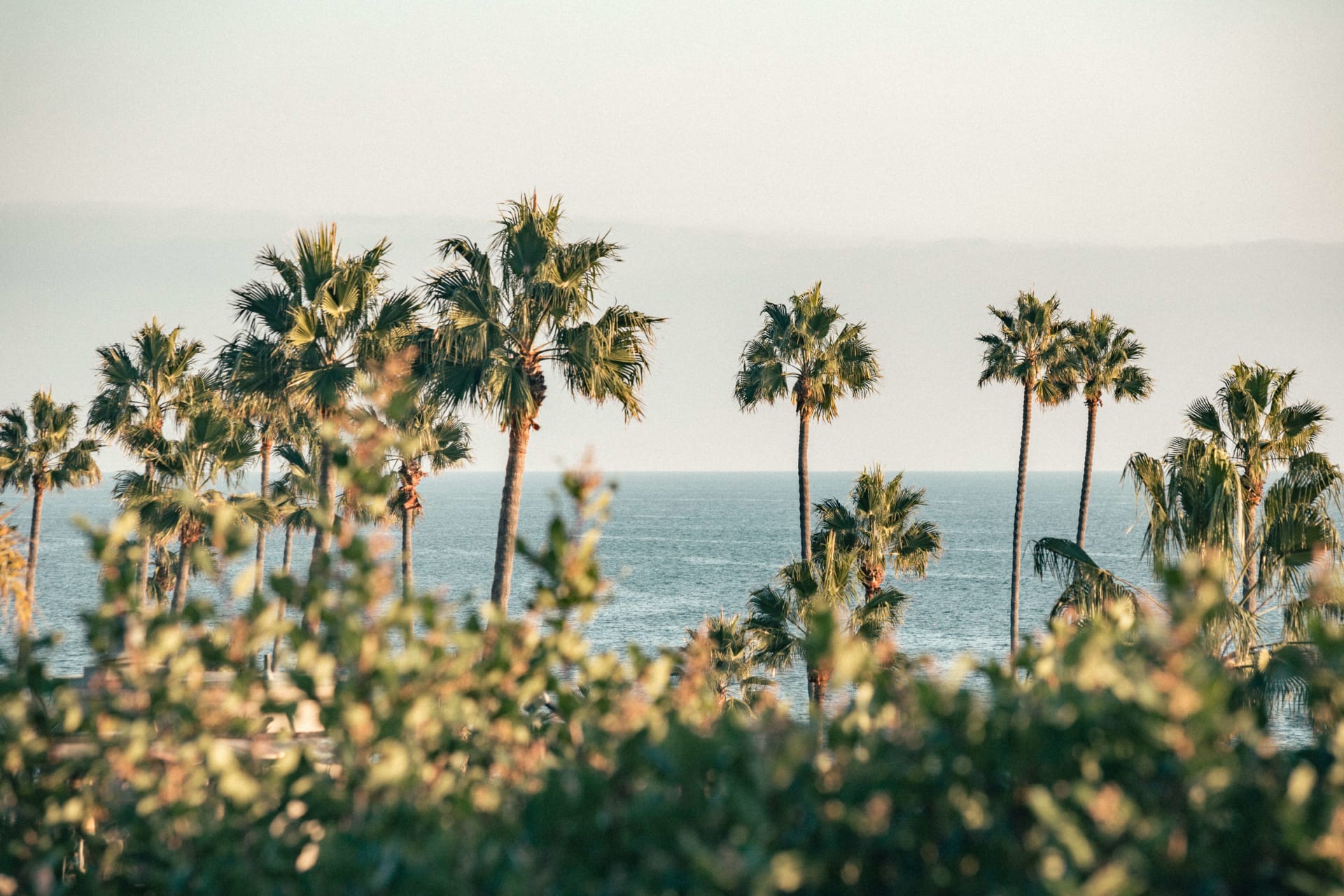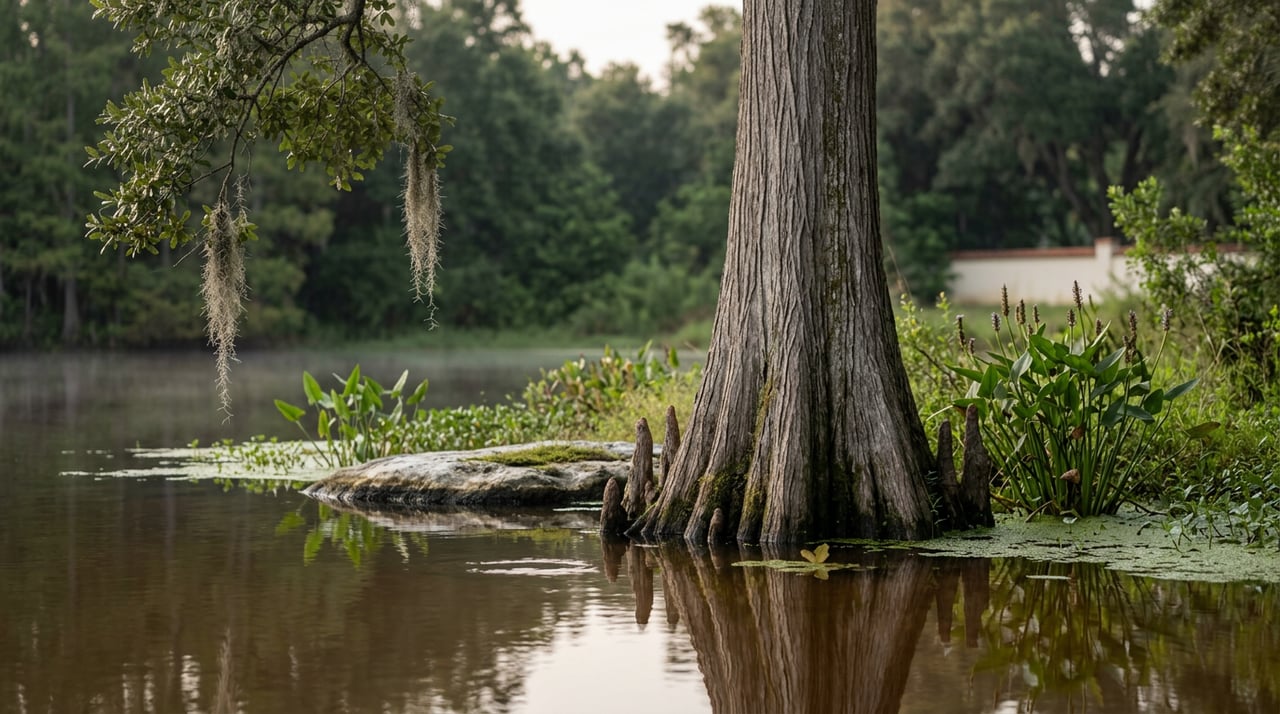
The rain moves through fast in August, the kind that turns a driveway into a river for twenty minutes and then vanishes into blue sky by four o'clock. On one of Avila's ponds off Guisando de Avila, the water rises an inch and a great blue heron steps into the new shallows before the last drops have cleared the oak canopy. It has done this before. It will do it again tomorrow. Nobody stocked this pond for it. Nobody built a blind or sold a season pass. The bird just knows the lake refills after a storm, the same way it has known for as long as anyone at the gatehouse can remember.
That is the part about Avila that a real estate listing rarely gets around to describing: the wildlife here is not landscaping. It is a working population that treats the neighborhood's ponds as its own address, and it has been doing so long enough that the community's own homeowners association writes about it the way a park service writes about a rookery, not the way a developer writes about a water feature.
What's actually working the water
Avila sits on roughly 700 acres bounded by Highway 41 to the west, Crenshaw Lake Road to the north, and Lake Magdalene Boulevard to the south, and inside those walls the developer left a dozen lakes, a conservation area, and stands of oak, cypress, and pine rather than paving every buildable acre. The community's layout dates back to 1978, when Bob Sierra was laying it out.
The Avila Property Owners' Association describes its own grounds in terms most HOAs reserve for clubhouse amenities: sandhill cranes raising chicks every spring, snowy egrets and little and great blue herons working the ponds for fish. These are not occasional visitors blown in during migration. Sandhill cranes in Florida are year-round residents, and a pair that nests successfully will typically return to the same territory, which means the cranes a homeowner sees crossing a cart path in March are very likely the same pair that crossed it last March too.
A rookery with a street address
Step just outside the gates and the pattern gets more specific. At 16217 Sagebrush Road, close enough that it shows up on travel sites as one of the attractions near Avila Golf & Country Club, sits a documented wood stork rookery known as the Northlakes Woodstork Colony and Nesting Area. Visitors who have logged sightings there describe seeing roughly a dozen active wood stork nests alongside dozens of anhinga nests, white ibis, and great blue herons during a mid-February visit, and a resident who reviewed the site in July 2025 wrote about driving past it on the way home and finding the trees "covered in white feathers" during nesting season.
The wood stork is not a background bird. It is the only stork species that breeds in the continental United States, and the U.S. Fish and Wildlife Service lists it as threatened because of long-term declines in its range and numbers, according to the Florida Fish and Wildlife Conservation Commission. A colony this size, sitting on undeveloped land bordering a residential community rather than inside a managed preserve, is not something every Tampa Bay neighborhood can claim next door.
...various other wading birds snatch fish from our many ponds and lakes.
That single line, pulled from the association's own community page, describes cranes raising chicks each spring and herons and egrets working the water for food. It reads less like marketing copy and more like a field note.
Why the birds stay instead of passing through
Avila has a dozen lakes plus an actual conservation area of oak, cypress, and pine, and that combination changes the calculus for a nesting bird. A single pond gives a heron somewhere to fish. A dozen connected lakes ringed by tree cover gives a sandhill crane pair somewhere to raise chicks, and it gives wood storks from the nearby Sagebrush Road colony a chain of foraging water within flight range of the nest.
Here is roughly how the cast breaks down and where a resident is most likely to run into each species:
| Species | Where you'll typically see it | Behavior |
|---|---|---|
| Sandhill crane | Cart paths, open lawns near ponds | Year-round resident, raises chicks each spring |
| Great blue heron | Lake edges, especially after rain | Fishes the shallows, often solitary |
| Snowy egret | Pond margins, shorter grass | Wades and forages, more social than herons |
| Wood stork | Northlakes colony on Sagebrush Rd, foraging on Avila's lakes | Threatened species, colonial nester |
| Anhinga, white ibis | Northlakes colony, tree canopy over water | Colonial nesters alongside wood storks |
None of this required a resident to plant anything or install anything. It required the neighborhood to leave the water and the trees alone.
What this actually means for the person living here
A resident does not need a birding permit or a car trip to experience most of this. The cranes cross driveways. The herons work the ponds visible from a rear lanai. The wood storks are close enough that a Saturday drive past Sagebrush Road during nesting season shows the colony from the car window, no hike required. That kind of proximity is unusual for a gated single-family community. Avila's own association writes about the wading birds like they are part of the amenity package, because in practical terms they are.
There is a courtesy side to this worth knowing before a resident or a guest gets curious with a camera. The FWC recommends staying at least 100 yards from an active wood stork colony and using binoculars rather than approaching, since disturbing a nesting colony can cause adults to abandon eggs or chicks. A few things that follow from that guidance:
- Photograph the Northlakes colony from at least 100 yards away rather than walking into the tree line.
- Keep dogs leashed near any of Avila's lake edges during nesting months, since ground-level disturbance near a rookery has an outsized effect on adult birds.
- If a sandhill crane pair sets up near a driveway or mailbox, give the nest a wide berth rather than moving it. Cranes are territorial and will often return to the same spot year after year regardless of what gets built nearby.
None of this is regulation dressed up as advice. It is the same practical knowledge that anyone who has spent time on Avila's lakes eventually picks up, and it is worth knowing before the birds show up rather than after.
The neighborhood most listings don't describe
A house search filters for square footage and lot size. It does not have a field for "sandhill cranes nest across the street" or "there's a threatened species colony within walking distance of the back gate." Those are the kinds of details that only show up once someone has actually spent a season here, watching the water rise after a storm and the herons move in before the driveway has finished draining.
Avila's dozen lakes and its bordering wood stork colony are not a marketing flourish. Wildlife uses the lakes and tree cover here.
If you already live inside these gates, the birds are yours to watch without leaving the property. If you're weighing what a place like Avila actually offers beyond the square footage, Jose Cardenas spends as much time thinking about a home's setting as its finishes. Explore more of what makes Avila's grounds worth knowing, or browse the fun stuff around here for more of Tampa Bay's local texture. Let's Artfully Market Your Home.