Is your roof helping or hurting your homeowners insurance and resale value in Avila? In Florida, insurers look closely at how well your home resists wind. In a gated estate community like Avila, the way your roof is built and documented can be the difference between smooth renewals at competitive premiums and frustrating surprises. This guide breaks down what wind‑mitigation means, how roof age factors in, and what steps you can take right now to protect your home and your bottom line. Let’s dive in.
Why wind mitigation matters in Avila
Insurers in Florida price risk around wind. They reward homes that can withstand high winds and keep water out. You earn those credits by documenting specific features through a wind‑mitigation inspection and by showing that your roof is the right material, properly attached, and in good condition.
For higher‑value homes in Avila, details like tile attachment, roof‑to‑wall connectors, and modern underlayment often decide how much credit you receive. When those features are verified, the wind portion of your policy can drop, sometimes significantly. Your total savings depend on each insurer, but getting the facts on paper is the key step.
What a wind‑mitigation inspection covers
A wind‑mitigation inspection is a focused assessment that records how your home stands up to wind. It is not a full home inspection. Insurers usually want the state’s standard mitigation verification form or an acceptable equivalent.
How insurers use the form
The inspection documents your roof shape, roof deck attachment, roof‑to‑wall connections, roof covering type and attachment, secondary water resistance, and opening protection. Insurers use those items to assign credits or surcharges for the wind portion of your premium. Only features that are documented on the accepted form typically count.
Features that earn credits
- Roof shape. Hip roofs tend to perform better than gables in wind events.
- Roof‑to‑wall connections. Continuous hurricane straps or clips reduce uplift risk.
- Roof deck attachment. Nail type and spacing matter. Stronger attachment is better.
- Roof covering and attachment. Code‑compliant shingles or mechanically fastened tiles help.
- Secondary water resistance. Modern peel‑and‑stick or comparable underlayment limits water intrusion if covering is damaged.
- Opening protection. Impact‑rated glass or approved shutters can reduce risk from debris.
- Gable end bracing and correct nailing patterns can also be considered.
Roof age and material: what insurers check
Roof age is a proxy for remaining life and failure risk. Insurers often set underwriting rules by age. New roofs built to a recent Florida Building Code cycle with proper attachments and underlayment tend to receive favorable treatment, while older roofs may trigger requests for certifications or replacement.
Age thresholds and documentation
Insurers vary, but a common pattern is that newer roofs earn better pricing, mid‑life roofs may need an inspection, and older roofs often require a licensed contractor’s certification to verify remaining life. Strong documentation helps:
- Permits and final inspection records for replacements and major repairs.
- A contractor’s roof certification describing type, age, condition, and years remaining.
- Recent wind‑mitigation and, if requested, 4‑point inspection reports.
- Photos of straps, nailing, and underlayment when accessible and safely captured by a professional.
Tile roofs: special considerations
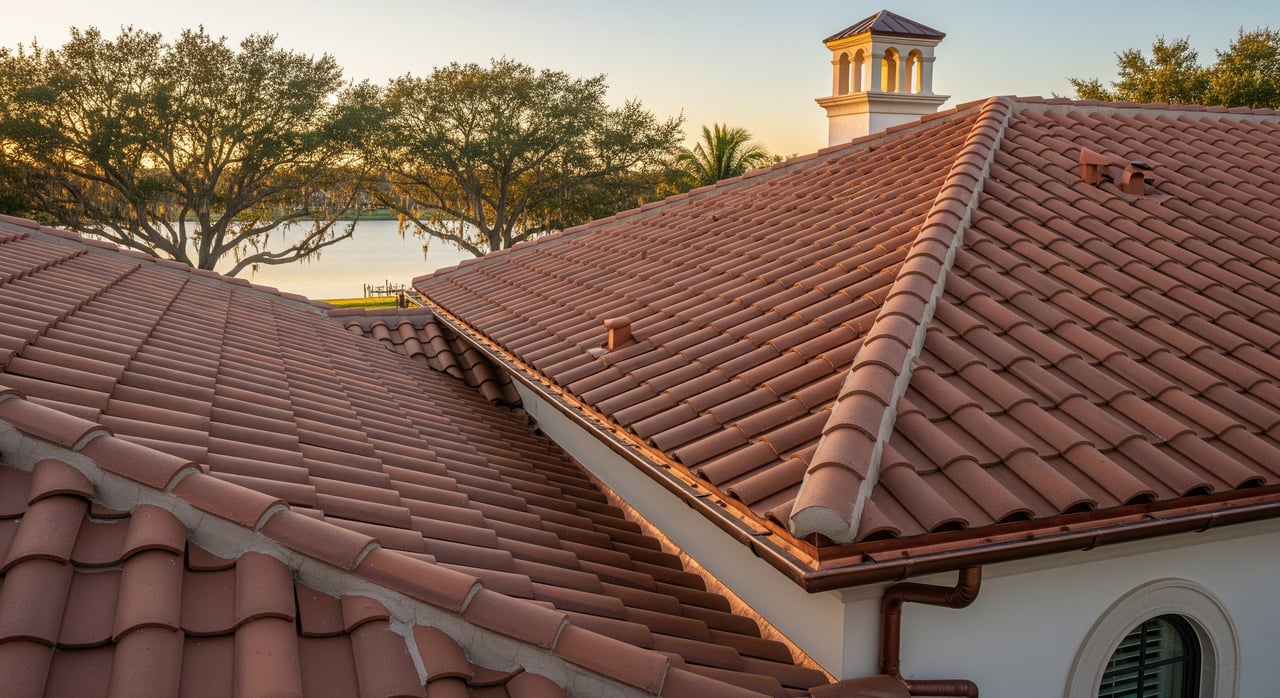
Tile is common on luxury estates, but tiles alone do not tell the full story. Insurers look for mechanical fastening, modern secondary water barriers, and proper attachment at hips, ridges, and eaves. Older tile roofs may have underlayment that no longer meets current expectations, which can allow water in even if tiles remain in place. Clear documentation and, when needed, targeted upgrades can improve both insurability and buyer confidence.
Metal and shingle roofs
Metal roofs often perform well in wind when properly attached and in good condition. Architectural shingles with high wind ratings and modern underlayments can also be favorable. For shingles, service life commonly falls in the 15 to 30 year range. The exact treatment depends on your insurer and the documented condition of the roof.
How mitigation lowers premiums
Insurers determine the impact of each feature differently, but combining multiple documented features often creates meaningful savings on the wind portion of your premium. Homeowners commonly see reductions ranging from single‑digit to multiple tens of percent on the wind line when several credits apply. Your total policy savings will depend on how your insurer allocates premium across coverages.
The Avila action plan
If you want smooth renewals, competitive quotes, or a clean sale, focus on steps that convert unknowns into documented strengths.
Step 1: Gather documentation
- Pull roof permits and final inspection records from Hillsborough County.
- Locate installation invoices, scopes of work, and prior inspection reports.
- Organize photos that show roof‑to‑wall connectors, attic‑side nailing, and underlayment at accessible eaves. Have a professional take any needed attic photos.
Step 2: Order a wind‑mitigation inspection
- Ask your insurer which inspection form and which professionals they accept.
- Hire a qualified inspector or licensed contractor with Florida mitigation experience.
- Submit the completed form to your insurer and ask how each feature impacts your rate.
Step 3: Get a roof certification if needed
- If your roof is near or past your insurer’s age threshold, hire a licensed roofing contractor for a written certification of remaining useful life.
- Request a signed letter on company letterhead describing roof type, age, condition, and expected years remaining.
Step 4: Consider cost‑effective upgrades
- Add or upgrade roof‑to‑wall connectors where practical.
- Install a modern secondary water barrier during re‑roofing or major repair.
- Improve opening protection with impact‑rated windows or approved shutters.
- When a full replacement is due, choose materials and attachments that meet current code and perform well in wind.
Step 5: Shop the market with an expert
- Ask each insurer for their documentation requirements and mitigation credit structure.
- Compare multiple quotes. If you are ineligible for the private market, explore options with Citizens.
- Work with a local agent who understands high‑value homes in Hillsborough County and how to present your documentation.
Step 6: Plan ahead for resale
For sellers in Avila, complete the wind‑mitigation inspection and roof documentation before you list. Buyers and their insurers will ask. Organized records and a recent roof replacement or certification can improve buyer confidence, reduce underwriting friction, and support stronger offers.
For buyers, verify roof age during due diligence, review the seller’s permits and inspection history, and consider commissioning your own mitigation inspection to align with your insurer’s requirements.
Step 7: Keep clean records
Maintain a digital file with permit numbers, inspection reports, certifications, and photos. Store both electronic and printed copies. Good recordkeeping makes renewals and closings easier.
Local resources to know
You have several helpful resources when you need records or guidance:
- Florida Department of Financial Services for consumer information on mitigation and discounts.
- Florida Office of Insurance Regulation for the state‑approved mitigation verification form.
- Citizens Property Insurance Corporation for mitigation credits and underwriting if you use Citizens.
- Hillsborough County Development Services and the Building Permit Center for roof permits and final inspections.
- Hillsborough County Property Appraiser for property data and to help corroborate roof age.
- FEMA Flood Map Service Center for flood mapping, which is separate from wind risk.
- National Hurricane Center for regional hurricane information and preparedness.
- Florida Department of Business & Professional Regulation to verify contractor and inspector licenses.
Always confirm your insurer’s accepted forms and providers before you order any inspection or certification.
Buying or selling in Avila
Avila buyers and sellers value certainty. In practice, that means fewer surprises during underwriting and closing. You can reduce friction by documenting mitigation features early, addressing obvious roof issues, and noting any recent upgrades in your disclosure package.
Sellers who present a clean wind‑mitigation report, current permits, and a roof certification often move faster through buyer due diligence. Buyers who validate roof age and attachments during inspection avoid last‑minute re‑quotes and approval delays.
Questions to ask your insurer
- Which wind‑mitigation inspection form do you accept and for how long is it valid?
- What credits apply for my roof shape, attachments, underlayment, and opening protection?
- At what roof age do you require a certification or replacement for my roof type?
- What documentation do you need on tile attachment or secondary water resistance?
- Which inspectors or contractors do you consider acceptable for certifications?
Bottom line for Avila homeowners
Wind‑mitigation features and roof age are not just boxes to check. When you document them well, you earn better insurance outcomes and create a smoother path to resale. In a luxury community like Avila, the details matter. A current inspection, strong paperwork, and smart upgrades can pay off in both lower premiums and buyer confidence.
If you want help crafting a market‑ready plan that aligns insurance documentation with design‑forward presentation, reach out to Jose Cardenas. Let’s prepare your Avila home with the precision and polish that drives results.
FAQs
What is a wind‑mitigation inspection for Avila homes?
- It is a focused inspection that documents features like roof shape, roof‑to‑wall connections, roof deck attachment, secondary water resistance, and opening protection so insurers can apply wind credits.
How does roof age affect Florida homeowners insurance?
- Roof age signals remaining life and risk. Newer roofs often receive favorable treatment, while older roofs may require a contractor’s certification or replacement depending on the insurer.
Do tile roofs in Avila automatically lower premiums?
- Not automatically. Insurers look for mechanical fastening, modern underlayment, and proper attachment details. Documentation determines credits, not just the tile material.
How much can mitigation credits save on premiums?
- Savings vary by insurer, but homeowners often see single‑digit to multiple tens of percent reductions on the wind portion of the premium when several features are documented.
What documents should I gather before renewal or listing?
- Roof permits and final inspections, contractor invoices and scope, prior wind‑mitigation or 4‑point reports, roof certifications, and photos of attachments and underlayment taken by a professional.
Who can perform a wind‑mitigation inspection in Hillsborough County?
- Qualified professionals such as licensed property inspectors, building code inspectors, or licensed contractors, subject to your insurer’s accepted provider list and form requirements.
Should Avila sellers complete inspections before listing?
- Yes. Presenting a current wind‑mitigation report and roof documentation builds buyer confidence and reduces underwriting delays, which can support stronger offers and smoother closings.